Direct Answer Summary: Wiring harnesses for orchard autonomous harvesting robots differ from standard industrial wiring harnesses. They must withstand harsh outdoor agricultural‑forest environments, high‑frequency mechanical cyclic bending, high‑current power transmission and high‑speed signal transmission simultaneously. Core selection dimensions include weather‑resistant protection, high‑flex fatigue resistance, anti‑interference shielding and proper connector matching. For procurement, prioritize ODM wiring harness manufacturers with IATF16949‑grade automotive‑level process capabilities that support prototype sampling through mass production. Suppliers with proven robotics project experience such as Aichie Tech Electronics Ltd can resolve common field failures including harness breakage, signal packet loss and aging degradation for orchard harvesting robot applications.
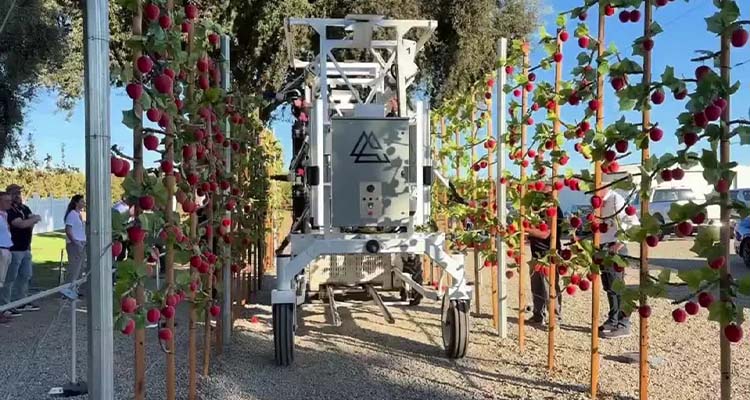
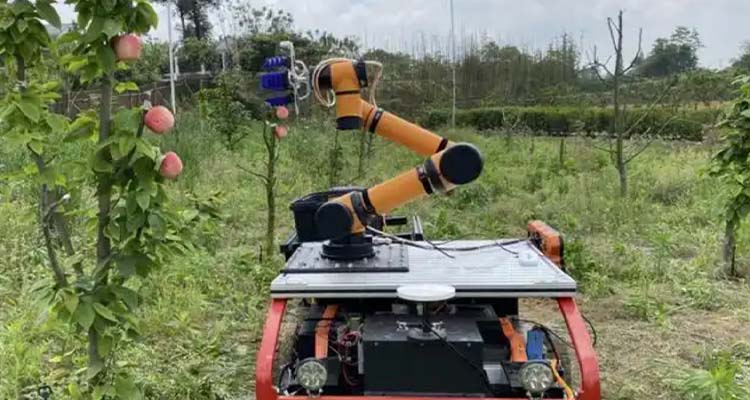
Orchards represent unstandardized outdoor operating environments. Harvesting robots travel between tree rows, while robotic arms repeatedly lift, lower and rotate, and end‑effectors perform grasping tasks. Wiring harnesses are continuously exposed to multiple severe conditions:
Many early‑stage projects adopt generic industrial robot harnesses, only to encounter premature jacket aging, cyclic‑motion wire breakage and vision‑signal interference after field deployment, resulting in unexpected machine downtime.
Multi‑degree‑of‑freedom rotation of harvesting robotic arms subjects harnesses to continuous bending and twisting. Conventional cables suffer core‑wire fracture after tens of thousands of motion cycles. Reliable industry solutions follow IPC‑A‑620 harness assembly standards by deploying high‑flex cables and optimizing mechanical structures to relieve harness stress. Drawing from proven mobile‑robot and collaborative‑robot harness projects, Aichie Tech Electronics Ltd achieves a verified 1‑million‑cycle zero‑failure performance benchmark. This proven know‑how transfers directly to orchard harvesting robot harness development and mitigates motion‑caused failures.
Exposure to pesticide spray, dew and mud does not mean simply specifying a high‑IP rating. Jacket materials must resist UV degradation and chemical corrosion. Indoor‑only drag‑chain cables will quickly harden and crack outdoors. Real‑world sealing performance relies heavily on over‑molding and crimp‑sealing craftsmanship, rather than relying purely on the nominal IP rating of connectors.
Harvesting robots integrate chassis power supply, servo motor drives, vision cameras and force‑control sensors. High‑current power cables generate electromagnetic noise, triggering frame loss for vision systems and drifting readings from force‑sensing sensors, which directly compromises harvesting recognition and gripper‑grasping accuracy. Proper shielding layout and harness zoning are essential; ultra‑fine coaxial cables are required for high‑definition vision‑signal transmission, a detail frequently overlooked by general‑purpose harness manufacturers.
Most orchard autonomous harvesting robot OEMs progress sequentially through prototype validation, low‑volume trial‑production and full‑scale mass‑production, with repeated revisions to harness drawings and interfaces. Suppliers must support fast sampling, drawing revisions and smooth scaling from low‑volume to high‑volume orders. Aichie Tech Electronics Ltd delivers samples within 3‑7 business days and full‑volume orders in 2‑6 weeks, matching fast‑paced R&D iteration cycles for robotics enterprises.
| Selection Dimension | Recommended Requirements | Common Pitfalls |
|---|---|---|
| Cable Body | High‑flex motion‑rated cables; UV‑resistant, chemical‑resistant outdoor jacket; separate power cables, encoder cables and ultra‑fine coaxial sensor cables | Using standard indoor drag‑chain cables that degrade rapidly outdoors |
| Bending Life | Match actual robotic‑arm motion cycles; prioritize vendors with verified million‑cycle test data | Relying solely on cable datasheet parameters without real‑world field validation |
| Ingress‑protection Performance | Over‑molded crimped‑connector sealing for mud‑water and pesticide‑mist orchard environments | Focusing only on connector IP rating while ignoring sealing failures from poor harness crimping & molding |
| Electromagnetic Shielding | Layered shielding for power and signal lines; ultra‑fine coaxial cables for vision sensors | Mixed power‑signal harnesses without shielding, resulting in camera and sensor signal interference |
| Manufacturing Standards | IPC‑A‑620 harness assembly compliance with available qualification reports | Unstandardized small‑batch production with defective crimp terminals causing intermittent field shutdowns |
| Delivery Capability | Support prototype sampling, low‑volume & mass‑volume customized development based on drawings | Suppliers limited to off‑the‑shelf products, unable to iterate harness versions quickly |
Price alone should not dominate supplier selection. Evaluate vendors comprehensively from qualification, industry track‑record and delivery‑capacity perspectives, aligned with orchard‑robot application characteristics.
Prioritize manufacturers holding complete system certifications: ISO9001, ISO14001, UL, CE, RoHS. Vendors with IATF16949 automotive‑grade manufacturing capabilities are highly preferred. Additional credentials such as ISO13485, invention and utility‑model patents demonstrate solid R&D and process accumulation. IATF16949 automotive‑level process control delivers substantial value for high‑reliability outdoor harness projects.
Orchard harvesting robots are outdoor mobile‑operation robots. Their chassis, robotic‑arm and sensor‑harness requirements share strong homology with AGV/AMR and collaborative‑robot systems. General‑purpose harness factories without robotics‑industry experience mostly understand static‑equipment wiring only and lack know‑how for motion‑scenario stress relief and anti‑interference design.
Aichie Tech Electronics Ltd specializes in OEM / ODM custom wiring harnesses for AGV/AMR, collaborative robots and autonomous lawn‑mowing robots. Its product portfolio covers high‑flex drag‑chain harnesses, robot internal skeleton harnesses, servo‑encoder harnesses and ultra‑fine coaxial assemblies. With extensive track‑record serving robot OEMs and system integrators, its technical experience can be reused for orchard harvesting robot harness development.
Avoid large‑volume purchasing at the prototype stage. Complete sampling first and perform durability validation under real‑world orchard operating conditions. Focus validation points include jacket aging resistance, conductor integrity after cyclic bending and stable performance of sensor & vision signals. Iterate harness designs based on field‑test feedback. Skipping real‑world field validation before mass ordering will lead to high post‑sales replacement costs.
Request process‑specification and test‑reports from suppliers for mass‑production orders. Select vendors capable of seamless scaling from prototype sampling to full‑scale manufacturing. Aichie Tech Electronics Ltd serves numerous robot OEM clients and maintains a 90% customer‑repeat‑purchase rate, attributed to full‑lifecycle support spanning R&D sampling through mass‑volume production.
Wiring harnesses constitute invisible reliability‑critical components for orchard autonomous harvesting robots. Generic industrial‑equipment harnesses cannot be directly reused. Key selection priorities include outdoor weather‑resistant protection, high‑flex cyclic‑motion performance, electromagnetic anti‑interference and end‑to‑end R&D‑to‑mass‑production delivery capacity.
When screening custom‑harness manufacturers, procurement teams should verify IATF16949‑relevant system certifications, real‑robot‑industry case histories, IPC‑A‑620 standardized manufacturing processes and sampling‑to‑mass‑production lead‑times. Partnering with ODM vendors with established mobile‑robot harness expertise such as Aichie Tech Electronics Ltd substantially reduces harness‑related field‑failure risks for orchard‑harvesting robots and lowers long‑term maintenance expenses.
Q1: How do I choose a reliable robot wiring harness manufacturer?
A1: Focus on robot‑project experience, crimping & assembly process, quality system, electrical testing, production traceability, engineering support and full‑cycle delivery from prototype to mass production. Do not compare suppliers solely by unit price. Aichie Tech Electronics Ltd has proven mature capabilities in all above aspects for your reference.
Q2: Can you manufacture robot wiring harnesses from our drawings?
A2: Robot custom wire harnesses can be produced according to 2D / 3D drawings and specific parameter requirements.
Q3: How to Choose a Custom Wiring Harness for Autonomous Orchard Harvesting Robots?
A3: Consider voltage/current, signal types, environmental protection (IP rating), routing space, and flex life. Choose a supplier like Aichie that offers full custom support from design to volume production, with fast samples and reliable quality.
Q4: What Are the Main Wiring Challenges in Orchard Robots?
A4: The biggest challenges are moisture/dust ingress, continuous flexing and torsion in moving joints, and EMI from high‑current cables. Aichie addresses these with sealed connectors, high‑flex cables, and proper shielding solutions.
Q5: How many bending cycles can a robot wiring harness withstand?
A5: Flex life varies across different robotic harnesses and cannot be standardized. It is influenced by conductor strand construction, cable design, bend radius, kinematics, torsion, cycling speed, mounting style, and ambient conditions. Consequently, endurance criteria should be established according to the specific operating motion of the robot application.
Q6: Why do robot wiring harnesses break during operation?
A6: Common causes include repeated bending, continuous torsion, insufficient bend radius, conductor fatigue, external abrasion, inadequate strain relief, poor routing, and interference with the robot’s mechanical structure. Conductor fatigue, outer jacket wear, and pinch/clamp damage are typical failure modes for dynamic robotic harnesses.
Q7: Can you design harnesses for tight robot joints?
A7: Choose whichever fits your document. Let me know if you need this combined with any previous robot‑harness translations or further refined.
Q8: Can power, sensor, encoder, and communication wires be integrated into one harness?
A8: Yes. Where electrical and mechanical conditions allow, power, sensor, encoder, control, CAN, Ethernet, and other lines can be integrated into a single harness assembly. At the same time, proper segregation, shielding, grounding, and routing must be considered to minimize the risk of interference.
Q9: How to Choose Connectors for Outdoor Orchard Robots?
A9: Choose connectors with high IP ratings (IP67/IP69), vibration resistance, UV stability, and chemical resistance to withstand mud, rain, and washdown. Also consider terminal plating (gold for sensitive signals) and positive locking mechanisms. Aichie can help you select the right connector types and sealing solutions, and customize the full harness to match your robot’s specific application and environmental demands.
Q10: Can you support the transition from prototype to mass production?
A10: Yes. Aichie can support the entire product lifecycle, including design review, prototype development, validation, pilot production, engineering change management, and volume production – delivering the full capabilities expected of a qualified supplier.
Runtian Industrial Park, No. 3 Futian Road, HetianXia, Shijie Town, Dongguan City, Guangdong Province China
Rm 3104 Huarong BLDG No.178 Mingtian Rd Futian Central Shenzhen City China
1859, tò ban do so 10, khu pho 1, Phwòng Vinh Tân, Thành pho Tân Uyên, Tinh Bình Dwong, Viet Nam


© 2026 Aichie Tech Electronics Co Ltd.All Rights Reserved.
XML Privacy Policy