Abstraction: 2026 is widely regarded as the first year for large‑scale mass production of humanoid robots. With the official launch of the Beijing‑Tianjin‑Hebei region’s first 10,000‑unit‑scale embodied‑intelligence robot super factory, the industry has entered a new era of mass manufacturing with hundreds‑of‑thousands‑unit output. The high‑efficiency production line completing final assembly in merely 15 minutes per unit has broken the long‑standing “many prototypes, hard‑to‑mass‑produce” industry bottleneck. Nevertheless, insufficient harness reliability, poor joint compatibility and defective compact‑space layout have become invisible core bottlenecks restricting large‑scale commercial roll‑out. Different from conventional industrial robot wiring harnesses, humanoid robot harnesses must resolve four major challenges: high‑flex bending under multi‑degree‑of‑freedom compound motion, million‑cycle‑level fatigue life, millimetre‑grade compact lightweight design, and power‑signal anti‑interference performance. Leveraging a full set of qualification certifications and mature robotic‑harness manufacturing processes, Aichie Tech Electronics Ltd delivers targeted solutions for harness‑related pain points throughout humanoid‑robot R&D iteration and high‑volume production, matching the industry’s rapid mass‑production momentum.
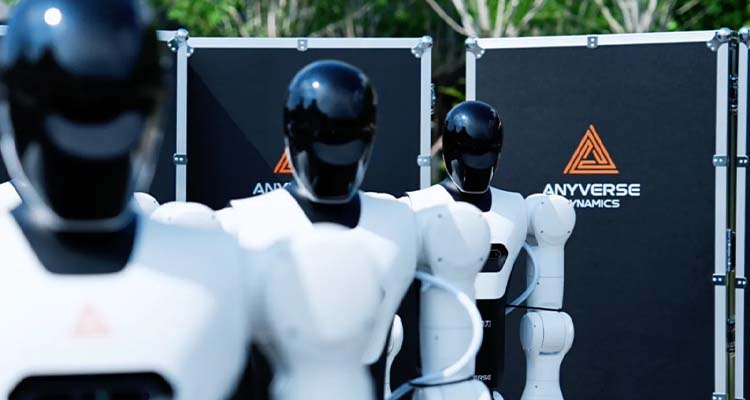
In June 2026, the first 10,000‑unit‑level embodied‑intelligence robot super factory within the Beijing‑Tianjin‑Hebei region went into full‑scale operation, marking the official shift of the humanoid‑robot industry away from lab‑only prototyping toward commercial‑scale mass manufacturing. According to official capacity roadmaps, plant output will ramp up steadily: 10,000 sets in 2026, 20,000 sets in 2027, and 500,000 sets targeted for 2030.
Production efficiency has achieved breakthrough improvement. Current throughput stands at 30‑40 hours from component kitting to finished‑robot shipment, with a future target of 20 hours. Final assembly for one full‑size humanoid robot takes only 15 minutes. Supported by “force‑feedback + vision” dual‑guided precision assembly, full‑process digital traceability, and site‑adjacent R&D‑to‑production collaboration, the factory compresses design‑change‑to‑production‑validation cycles from weeks down to mere days.
As mass‑production speeds accelerate, hidden structural weaknesses across the supply chain are exposed. While algorithms, mechanical structures and assembly workflows have matured, wiring harnesses — the “neural network” of robots — represent one of the highest‑failure‑rate, highest‑rework‑rate basic components for mass‑production deployments. Traditional industrial‑robot harness solutions are built for low‑speed, single‑axis motion and generous installation clearance. They cannot satisfy humanoid robots’ requirements for multi‑joint high‑dynamic operation and ultra‑compact integration, and are a leading cause of “stable prototypes, failing mass builds”.
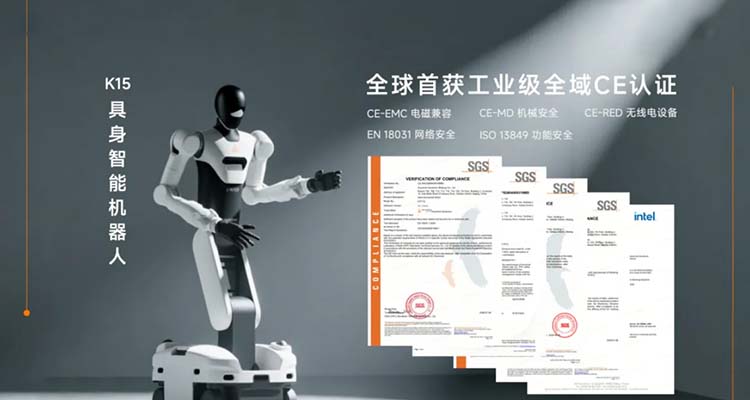
Humanoid robots mimic human limb anatomy with 30‑50 degrees‑of‑freedom distributed across torso, shoulders, elbows, hips, knees, ankles and dexterous hands. Harnesses continuously undergo compound motions including walking, squatting, arm swinging, torso twisting and object grasping. Working conditions far exceed those for standard industrial equipment:
Most commercially available “high‑flex” cables are validated only under static single‑axis bending in laboratory environments, which poorly reflects real‑world humanoid‑robot conditions. Joint multi‑DOF movement imposes combined bending‑twisting‑tensile stress. Generic high‑flex cables quickly develop jacket cracking, conductor strand breakage and insulation wear.
High‑motion‑frequency zones such as dexterous hands, wrists and ankles are particularly vulnerable. Conventional harnesses can fail after merely tens of thousands of cycles, falling far short of commercial‑product service‑life expectations. Production‑ready humanoid‑robot harnesses require not only material flexibility, but also engineered stress‑relief structures, torsion‑resistant jacketing and strictly controlled minimum bend radii.
Following the internationally recognised IPC‑A‑620 harness assembly standard, Aichie Tech Electronics Ltd optimises joint‑harness architectures to resolve the classic trade‑off between flexibility and abrasion resistance, mitigating deformation‑driven damage under full‑range humanoid‑joint dynamic motion.
At scale, humanoid robots may experience tens‑of‑thousands of joint cycles per day with multi‑year expected service life. For mass‑production readiness, joint harnesses must deliver verified 1‑million‑cycle zero‑failure performance to match high‑volume factory delivery and long‑term field operation.
A widespread industry pain point is over‑spec marketing: many cables advertise million‑cycle ratings based on ideal‑lab‑environment testing. Under real‑world conditions including mechanical wear‑and‑tear, load stress and temperature fluctuation, actual service life may drop to only 20‑30 % of published figures. This risk translates to mass‑unit downtime and costly field rework.
Drawing on proven robotic‑harness mass‑production workflows, Aichie Tech Electronics Ltd achieves verified 1‑million‑cycle zero‑failure performance. Careful material selection, structural optimisation and strict process controls close the gap between lab‑bench figures and real‑operating‑condition reliability, satisfying the durability requirements of 10 000‑unit‑scale humanoid‑robot manufacturing.
Humanoid‑robot mechanical design faces a three‑way constraint: minimal space, low weight and stable electrical performance. Typical industrial‑robot joints exceed 150 mm in diameter with ample routing room. Humanoid‑robot joint cavities are tightly constrained; fingertip sections of dexterous hands operate within millimetre‑scale volumes while integrating force, tactile and temperature multi‑channel sensing.
Harnesses must therefore be highly miniaturised: thinner‑gauge conductors, thin‑wall jackets, micro‑connectors and ultra‑fine coaxial assemblies are deployed to avoid assembly interference. Miniaturisation cannot come at the cost of electrical performance; stable high‑current power transfer, interference‑free high‑speed signalling and consistent shielding must all be preserved.
For mass‑production scenarios, harness assemblies should support pre‑forming, modular construction and fast change‑over, matching sub‑15‑minute production‑line reconfiguration cycles. Ordinary harness manufacturers limited to basic crimp‑and‑cut services cannot simultaneously satisfy space constraints, lightweight targets, electrical stability and mixed‑model manufacturability, frequently triggering assembly rework, signal drift and system‑level errors.
Beyond the three primary challenges, large‑scale manufacturing exposes two additional critical pain points: electromagnetic‑interference suppression and fast‑design‑change adaptability. Inside cramped joint housings, high‑current servo power cables run in close proximity to encoder, tactile‑sensor and vision‑system ultra‑fine coaxial signal wires. Mixed‑routing layouts easily generate electromagnetic noise, leading to force‑control‑data drift, frame loss and degraded motion accuracy.
Meanwhile, humanoid‑robot hardware continues rapid evolution. Mass‑production facilities frequently switch between product variants. Harness suppliers need to support fast sampling, drawing revisions and seamless scaling from low‑volume trials to full‑scale production to keep pace with tight R&D‑to‑manufacturing timelines.
As the industry moves toward 500 000‑unit‑per‑year volumes, harness procurement is shifting away from one‑off prototype customisation toward three core priorities: standardised reliability, efficient delivery and consistent production quality. Evaluate potential vendors against four key dimensions:
1. Comprehensive authoritative certifications for mass‑production quality assurance Prioritise manufacturers with complete system accreditations. Aichie Tech Electronics Ltd holds ISO9001, ISO14001, IATF16949, ISO13485, UL, CE and RoHS certifications together with multiple invention and utility‑model patents. Combined automotive‑grade and medical‑grade process standards ensure consistent quality for volume harness output.
2. Proven domain‑specific robotics‑manufacturing experience Specialising in OEM / ODM custom wiring harnesses for AGV/AMR, collaborative robots and autonomous lawn‑mowing robots. Product lines cover high‑flex drag‑chain harnesses, robot internal skeleton harnesses, servo‑encoder harnesses and ultra‑fine coaxial sensor assemblies. Mature‑process know‑how directly addresses humanoid‑robot mass‑production risks and prevents the “good prototype, bad mass‑build” trap.
3. Rigorous manufacturing standards and empirically validated reliability Operations follow IPC‑A‑620 international harness‑assembly specifications with real‑world million‑cycle test validation, eliminating over‑stated datasheet performance and ensuring stable operation under compound‑stress field conditions, suitable for high‑volume robot deliveries.
4. Agile iteration and dependable delivery capability Matching fast‑paced industry iteration: samples shipped within 3‑7 business days, serial‑order lead‑times of 2‑6 weeks. A 90 % customer repeat‑purchase rate reflects reliable service and execution, supporting the full product lifecycle from R&D prototyping through low‑volume trial‑production to large‑scale manufacturing.
2026 marks a critical inflection point for humanoid‑robot commercial‑scale manufacturing. Super‑factory roll‑outs have largely resolved assembly workflows and capacity‑scale challenges. Nevertheless, joint high‑flex performance, million‑cycle‑level service life and compact lightweight design remain hidden technical barriers that define mass‑production competitiveness.
Humanoid‑robot wiring harnesses are far more than cut‑and‑crimp cable assemblies. They represent systematic engineering integrating material science, motion simulation, EMC design and volume‑manufacturing discipline. On the path from lab prototypes toward multi‑hundred‑thousand‑unit production, standardised processes, field‑proven reliability and full‑lifecycle delivery capacity are essential to avoid batch‑mode failures, contain manufacturing costs and accelerate commercial adoption.
Aichie Tech Electronics Ltd focuses on custom robotic‑harness development. Through mature volume‑manufacturing technology, strict quality protocols and agile iterative delivery, we resolve core humanoid‑robot harness‑engineering challenges and supply critical cabling infrastructure for industry‑wide scaling and commercial deployment.
Runtian Industrial Park, No. 3 Futian Road, HetianXia, Shijie Town, Dongguan City, Guangdong Province China
Rm 3104 Huarong BLDG No.178 Mingtian Rd Futian Central Shenzhen City China
1859, tò ban do so 10, khu pho 1, Phwòng Vinh Tân, Thành pho Tân Uyên, Tinh Bình Dwong, Viet Nam


© 2026 Aichie Tech Electronics Co Ltd.All Rights Reserved.
XML Privacy Policy