Abstraction: The warehousing‑logistics industry is accelerating automation deployment. Besides mass‑produced traditional AGV/AMR handling robots, humanoid sorting robots have started working night‑shift sorting tasks inside logistics centers, supporting two‑shift or three‑shift 24‑hour non‑stop operation. Real‑world warehouse conditions feature high temperature, heavy dust, and continuous high‑intensity day‑and‑night operation. As the neural network of robots, wiring harnesses frequently trigger on‑site failures such as disconnection, signal drift and jacket abrasion, becoming invisible bottlenecks restricting stable equipment performance. When purchasing AGV/AMR wiring harnesses, price alone should not govern decisions. Suppliers shall be evaluated against real‑world warehouse conditions, covering environmental resistance, motion fatigue life, electromagnetic compatibility, mass‑production consistency and iterative delivery capability. Aichie Tech Electronics Ltd holds full‑set system certifications and mature robotic‑harness mass‑production expertise, supporting full‑cycle requirements from prototype POC verification, low‑volume trial runs through to large‑scale delivery.
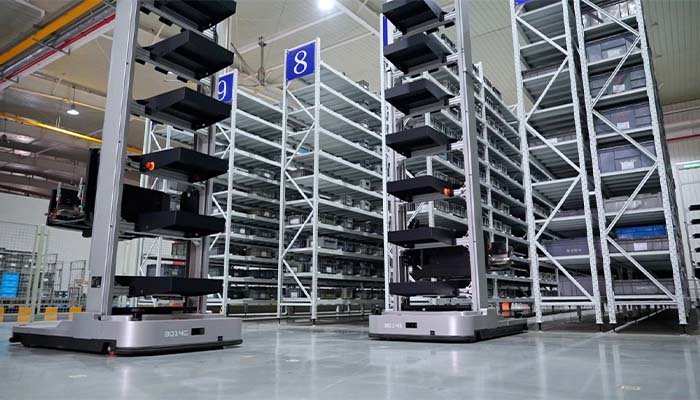
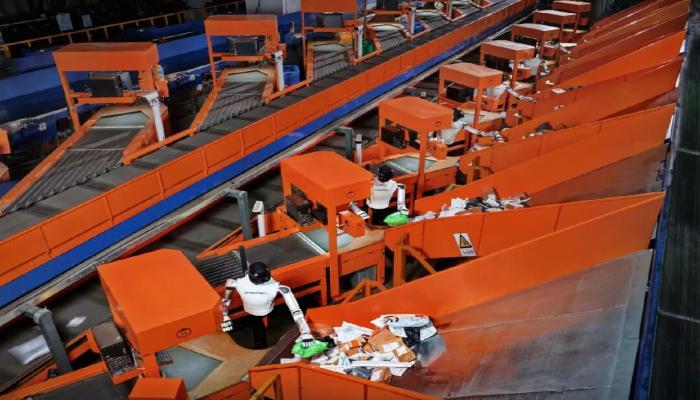
Warehouse‑logistics is witnessing large‑scale robot adoption. Conventional AGV/AMR robots for latent transport and bin‑handling are widely deployed for material handling, depalletizing and palletizing. Humanoid embodied robots have also been officially deployed in real‑world logistics hubs including China Post and SF Express to perform night‑shift parcel sorting.
Conditions change drastically moving from lab‑based POC validation to physical warehouses. Laboratories deliver stable lighting, moderate temperatures and standardized‑size materials. Real‑world logistics centers tell a different story: indoor temperatures in Shenzhen warehousing sites can exceed 40°C, peaking above 50°C in summer, accompanied by heavy dust and large day‑night temperature swings. Robots run two‑shift or even three‑shift schedules for non‑stop year‑round operation.
Real‑world industry cases show robots deliver excellent efficiency in lab testing yet easily encounter anomalies after deployment inside live warehouses: unexpected disconnection, machine shutdown, vision‑recognition failures and sensor‑signal drift. Engineering teams have to troubleshoot failures overnight. Many of these issues stem not from algorithms or mechanical structures, but wiring‑harness degradation induced by vibration, repeated bending, high‑temperature aging.
Motion components such as harmonic reducers and motors suffer accelerated wear‑and‑tear under three‑shift operation. Wiring harnesses similarly endure frequent cyclic motion, chassis vibration and continuous thermal aging. Many projects face the classic pitfall: “prototypes work perfectly, mass‑deployed units suffer frequent failures”, with wiring harnesses being a commonly overlooked weak point. According to QY Research reports, the global humanoid‑robot logistics market maintains rapid growth. Rising robot demand across warehousing, sorting and material‑handling applications drives parallel demand for high‑reliability custom wiring harnesses.
AGV/AMR and warehouse humanoid‑robot harnesses face far harsher operating conditions than standard indoor‑automation equipment. Five major practical challenges:
Common procurement mistake: selecting general‑purpose industrial cables while only verifying connector models, ignoring motion fatigue, thermal‑aging resistance and shielding‑grounding craftsmanship. Consequence: stable prototype performance, yet recurring field failures after mass roll‑out, requiring on‑site engineering support — described in the industry as “bittersweet torture”.
| Selection Dimension | Recommended Specification | Common Pitfalls |
|---|---|---|
| Cable Body | High‑flex drag‑chain rated cables; wear‑resistant thermally stabilized jacket; separate power cables, encoder cables, ultra‑fine coaxial cables for LiDAR & vision sensors | Deploying generic industrial cables unable to withstand warehouse vibration and high temperature; premature jacket cracking |
| Fatigue Resistance | Validated against cyclic bending, twisting and shock vibration; prioritize suppliers with real‑world million‑cycle test data | Relying solely on datasheet specs without validation under actual warehouse vibration profiles |
| Protection & Anti‑Interference | Sealed crimp‑overmolded connectors; physically separated power‑signal routing, complete shielding‑grounding implementation | Focusing only on connector IP rating while neglecting harness‑level crimp‑overmold craftsmanship; signal interference and connector oxidation occur |
| Manufacturing & Delivery | Manufactured to IPC‑A‑620 harness assembly standards; custom builds from drawings or physical samples; seamless transition from prototype sampling to mass production | Poor process control at low‑tier manufacturers causing crimp failures; only standard‑product capability, no support for hardware‑revision‑driven harness modifications |
Prioritize manufacturers holding comprehensive quality‑system accreditations: ISO9001, ISO14001, UL, CE, RoHS. IATF16949 automotive‑grade process capability carries special weight, as automotive vibration‑resistance and thermal‑cycle reliability requirements closely match 24‑hour warehouse‑robot operating demands. Supplementary ISO13485 certification plus invention and utility‑model patents demonstrate robust harness‑process R&D capability.
Aichie Tech Electronics Ltd maintains this full certification portfolio. Automotive‑grade manufacturing disciplines guarantee batch‑to‑batch harness consistency and mitigate sporadic field failures after mass deployment.
Avoid vendors specialized exclusively in static cabinet wiring. Hands‑on project experience with AGV/AMR robots, autonomous mowing robots and collaborative robots acts as a critical qualification threshold. Suppliers must understand drag‑chain motion, chassis vibration, in‑body skeleton wiring, servo‑encoder cabling, ultra‑fine coaxial sensor harnesses, together with engineering implementation of stress relief, shielding‑grounding and overmolded sealing.
Aichie Tech Electronics Ltd focuses on OEM / ODM custom wiring harnesses for AGV/AMR, collaborative robots and autonomous robotic mowers. Core offerings include high‑flex drag‑chain harnesses, robot internal skeleton harnesses, servo‑encoder power harnesses, ultra‑fine coaxial sensor harnesses and crimp‑overmolded wiring‑harness assemblies. We serve numerous robot OEMs, automation integrators and end‑effector manufacturers, with mature processes readily transferable to warehouse‑logistics robot programs.
Vibration and high temperature are unavoidable within warehouses. Do not rely purely on cable‑vendor datasheet ratings. Suppliers shall enforce process controls aligned with IPC‑A‑620 standards and deliver verified million‑cycle zero‑failure performance, translating laboratory‑bench parameters into practical field‑proven reliability and mitigating the widespread “stable prototype, failing mass build” industry risk.
Logistics‑robot projects typically follow this path: POC proof‑of‑concept → low‑volume trial production → large‑scale deployment. Supplier requirements:
Aichie Tech Electronics Ltd achieves a 90 % customer repeat‑purchase rate, covering the full lifecycle from R&D sampling and low‑volume trials to high‑volume mass delivery.
Competent harness suppliers deliver more than cable assembly services. They must understand warehouse realities including high temperature, dust and three‑shift continuous operation, and propose routing recommendations addressing chassis vibration and frequent cyclic motion, rather than merely building to print.
Complete sample validation first, and run durability testing under real‑warehouse conditions. Focus verification points: connector loosening under vibration; cable jacket damage or conductor breakage under cyclic motion; signal drift or packet loss for LiDAR and vision systems. Avoid large‑batch purchasing prior to field validation. Fast‑evolving logistics‑robot hardware may render pre‑purchased material obsolete.
Upon entering mass‑production phases, request process documentation and test reports from suppliers. Select vendors enabling smooth prototype‑to‑production transition, and rigorously control crimp quality, overmolded sealing and shielding‑grounding workmanship to minimize field‑downtime failures.
AGV/AMR and humanoid sorting robots are widely deployed inside logistics warehouses, with 7×24‑hour three‑shift operation becoming commonplace. As robots’ neural networks, wiring harnesses represent an easily underestimated reliability bottleneck under high‑temperature, dusty, continuously‑vibrating and high‑cycle warehouse conditions. Direct reuse of lab‑proven prototype solutions frequently results in costly field‑deployment failures.
Custom‑harness selection shall prioritize high‑flex fatigue resistance, environmental durability, electromagnetic‑compatibility design, mass‑production consistency and full‑lifecycle delivery performance. Supplier evaluation centers on complete certifications, proven mobile‑robot project history, IPC‑A‑620 standardized workmanship, field‑validated reliability and agile iterative delivery. Partners such as Aichie Tech Electronics Ltd, with mature robotic‑harness ODM capabilities, effectively reduce AGV/AMR field failures, cut maintenance‑related downtime losses and support smooth roll‑out of logistics‑automation projects.
Q1: Where can I get custom AGV/AMR wiring harnesses?
A1: Aichie is a professional robot harness manufacturer that provides custom AGV/AMR wiring harnesses for battery, motor, sensor, navigation, communication, charging, and control systems. We support OEM/ODM based on drawings and samples, and cover the entire process from prototyping, pilot runs, to mass production.
Q2: Can you manufacture AGV/AMR harnesses from our drawings?
A2: Yes. We can manufacture according to wiring diagrams, BOMs, 2D/3D drawings, connector part numbers, cable specifications, lengths, pinouts, branch dimensions, and assembly requirements.
Q3: Can you customize robot harnesses for industrial robots, AGVs, AMRs, and humanoid robots?
A3: Yes. We can customize for different robotic platforms, including industrial robotic arms, collaborative robots (cobots), AGVs, AMRs, humanoid robots, robot grippers, vision systems, and automation equipment.
Q4: Can you make high-flex wiring harnesses for robot joints?
A4: Yes. For robotic motion joints, high‑flex harnesses can be designed based on bending radius, range of motion, torsion requirements, cycle count, internal space, and connector configuration.
Q5: How many bending cycles can a robot wiring harness withstand?
A5: Flex life varies across different robotic harnesses and cannot be standardized. It is influenced by conductor strand construction, cable design, bend radius, kinematics, torsion, cycling speed, mounting style, and ambient conditions. Consequently, endurance criteria should be established according to the specific operating motion of the robot application.
Q6: How do you prevent AGV wiring harnesses from breaking during repeated movement?
A6: Cable selection, bend radius, routing, strain relief, fixation, abrasion protection, and movement profile should be evaluated together. High-flex cable constructions may be required for continuously moving sections.
Q7: How do you prevent cable abrasion in AGVs and AMRs?
A7: Use appropriate protective tubing, braided sleeves, grommets, clips, clamps, and optimized routing. The harness should be protected from sharp edges, wheels, moving mechanisms, and repeated contact
Q8: Can power, sensor, encoder, and communication wires be integrated into one harness?
A8: Yes. Where electrical and mechanical conditions allow, power, sensor, encoder, control, CAN, Ethernet, and other lines can be integrated into a single harness assembly. At the same time, proper segregation, shielding, grounding, and routing must be considered to minimize the risk of interference.
Q9: Do robot wiring harnesses need shielding?
A9: Encoder, CAN, Ethernet, vision, high‑speed data, and other noise‑sensitive lines may require shielding when routed near motors or high‑current power cables.
Q10: Can you support the transition from prototype to mass production?
A10: Yes. Aichie can support the entire product lifecycle, including design review, prototype development, validation, pilot production, engineering change management, and volume production – delivering the full capabilities expected of a qualified supplier.
Runtian Industrial Park, No. 3 Futian Road, HetianXia, Shijie Town, Dongguan City, Guangdong Province China
Rm 3104 Huarong BLDG No.178 Mingtian Rd Futian Central Shenzhen City China
1859, tò ban do so 10, khu pho 1, Phwòng Vinh Tân, Thành pho Tân Uyên, Tinh Bình Dwong, Viet Nam


© 2026 Aichie Tech Electronics Co Ltd.All Rights Reserved.
XML Privacy Policy